Back to InsightsArchitecture 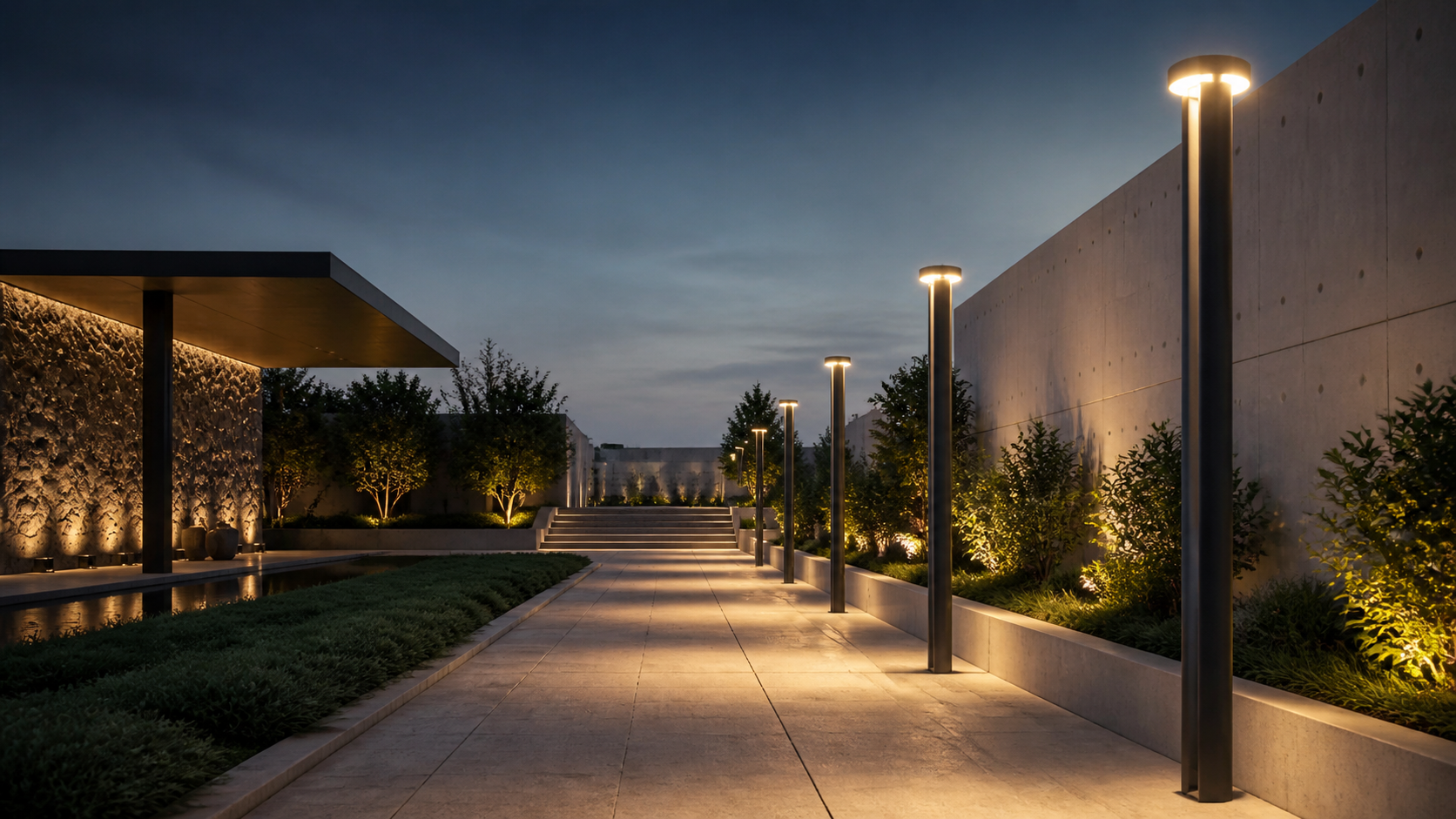
The Role of Lighting Poles in Architectural Projects
Why scale, proportion, optics and finish make a lighting pole part of the architecture rather than a separate utility object.
Proportion shapes perception
Pole height, arm length and luminaire scale influence how a street or public space is perceived. The correct proportions create continuity without obstructing important views.
Optical performance comes first
Spacing should be based on a lighting calculation, not a fixed visual rule. Distribution, mounting height, surface reflectance and target illuminance all affect the result.
Details create coherence
Finish colour, access doors, base plates and connection details should align with the wider material palette. Consistent detailing makes technical infrastructure feel intentional.